Skip links

​The EBR Implementation Guide: Part 4 – Kick-off to Go-live with your 1st Product on EBR in 2 months

The advantages of Electronic Batch Records (EBR) in pharmaceutical and biotech manufacturing are clear: stronger data integrity, faster batch release, reduced errors, and improved compliance. 


Yet moving from paper to digital can still present challenges. In this guide, we outline the common pitfalls that slow down EBR projects—and the proven practices that help teams avoid them and achieve a successful go-live in as little as two months.

At the core, the most successful projects share three traits:


  1. Teams adopt the right mindset early,
  2. Requirements are clearly understood and stable, and
  3. Validation is approached in a modern, risk-based way.

What must be in place before starting an EBR project?


These four prerequisites dramatically increase your chance of a smooth, timely go-live.

1. Define Your Cloud Strategy Early

(Multi-Tenant vs Virtual Private Cloud)

The shift to cloud-based EBR solutions continues to accelerate as manufacturers seek faster deployment, scalability, and lower operational overhead. But how you adopt cloud technology matters.


There are two primary cloud models to consider:

1. Multi-Tenant Cloud (MT)

2. Virtual Private Cloud (VPC)

  • Hosted on shared infrastructure (e.g., Microsoft Azure)
  • Strong built-in security, automatic updates, standardized configuration
  • Ideal for companies with limited IT/security resources
  • Lower validation burden due to standardization
  • Fastest deployment path
  • Dedicated cloud environment for a single customer
  • Greater control over data lifecycle, storage, and performance
  • Suitable for enterprises with complex IT requirements or custom integrations
  • More flexible, but requires more involvement from internal IT

How fast can a modern EBR be deployed on cloud?


BatchLine MES supports both architectures, enabling deployment in less than two weeks regardless of cloud model—allowing teams to move quickly once the project starts.

2. Prepare Operations and Quality Teams

for the Mindset Shift

Moving from paper to electronic batch execution is not only a technical change

— it is a transformation in how people work.

Success depends on early alignment across:


  • Operators
  • Supervisors
  • Process engineers
  • Quality personnel
  • IT
  • Senior management

Formal training is essential, but practice matters even more.

Identify “internal champions” early—these key users will:


  • Learn the system in depth
  • Support colleagues on the shop floor
  • Reinforce new ways of working
  • Help drive adoption after go-live


Well-prepared champions accelerate user confidence and reduce resistance.

3. Design a Strong Process Specification (MBR Recipe)

A well-designed Master Batch Record (MBR) is the backbone of a successful EBR project.


During BatchLine’s 5-day MBR design training, process engineers learn to:


  • Map the production process accurately
  • Incorporate critical process parameters (CPPs), critical quality attributes (CQAs), and control limits
  • Configure exception rules
  • Build enforceable workflows
  • Create scalable templates for future products


Building this internal skillset early is critical. It enables self-service, reduces long-term service costs, and speeds up rollout across product families and sites.

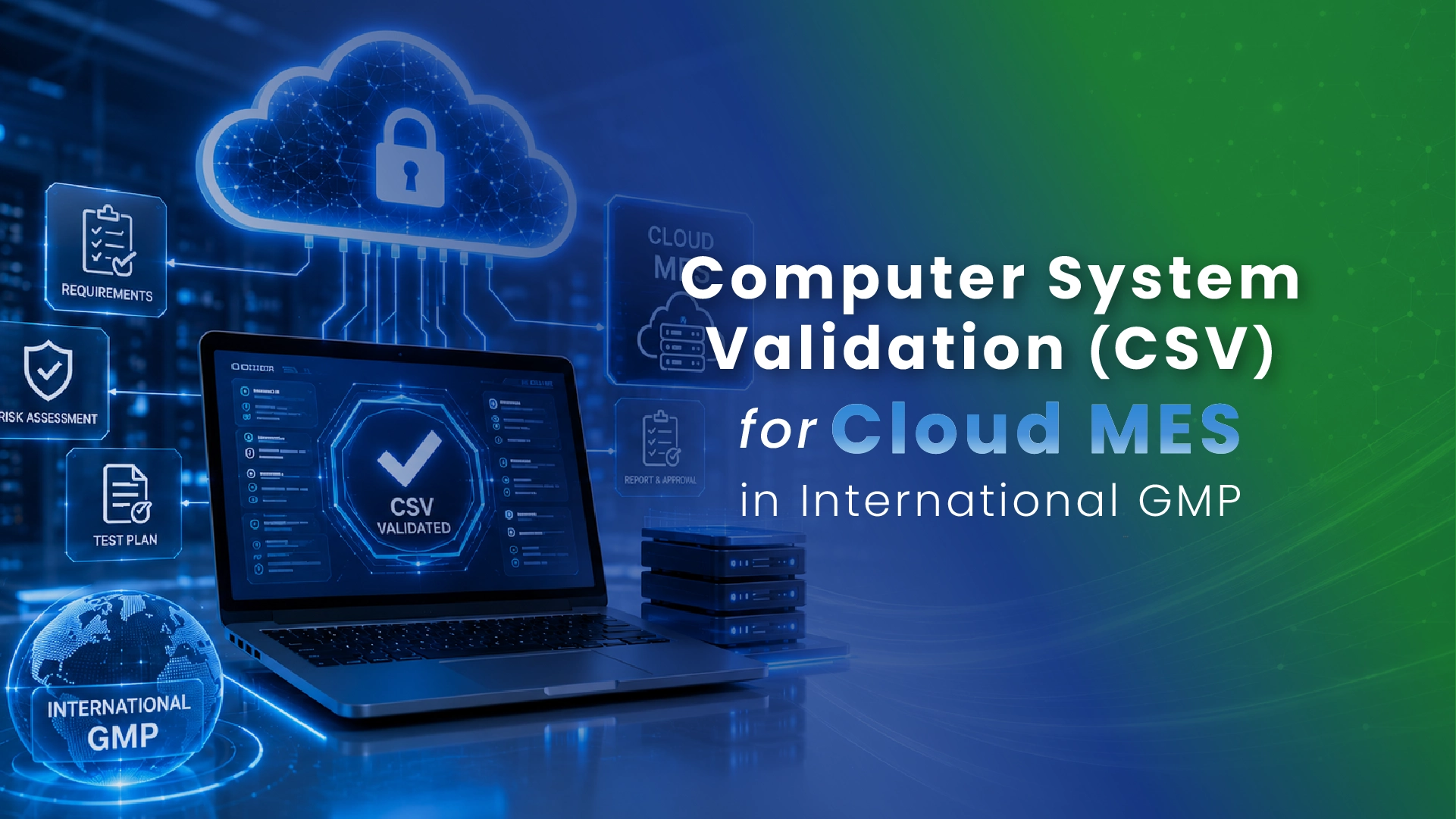
4.Plan for Efficient Cloud-Based Validation

Cloud validation is simpler than traditional on-premise computer systems validation (CSV)

— but only when teams understand the shared responsibility model.

In a typical BatchLine project:


  • Azure provides the qualified infrastructure
  • BatchLine installs, configures, and qualifies the application under its QMS
  • The customer focuses on process-level testing, risk-based qualification, and final release decision


This significantly reduces IT and validation effort compared to legacy MES deployments.

BatchLine’s validation approach follows GxP, GAMP, and modern CSA principles, with:


  • Pre-defined templates
  • Risk-based testing
  • Clear documentation packages
  • Streamlined lifecycle controls


Understanding this model early prevents unnecessary rework later and accelerates release for use.

Summary:

A Proven Approach to Fast, Confident EBR Go-Live

Implementing EBR in just two months is achievable when teams:


  • Choose the right cloud strategy
  • Prepare operations and QA early
  • Build strong, scalable MBR designs
  • Follow a modern, efficient validation approach

With the right structure, tools, and support, manufacturers can move from kick-off to first-product go-live quickly — achieving measurable  improvements in compliance, speed, and operational efficiency

If you’re exploring EBR adoption and want to see how BatchLine can support a fast, compliant, and scalable implementation, our team is ready to help.

Check out ​other chapters

Read for our next articles in this serie in which we will provide more advice about implementing an Electronic Batch Recording system.

​The EBR Implementation Guide: Introduction

Part 1:

Tips on scoping the initial EBR deployment

Part 2:

Selecting a suitable EBR

Part 3:

POC's, POV's, Trials

Part 5:

Validating EBR

Leave a comment