Skip links

Building AI-ready pharma manufacturing with EBR and MES

Artificial intelligence (AI) is creating new opportunities in pharmaceutical manufacturing but AI can only be as useful as the data and digital processes behind it. 

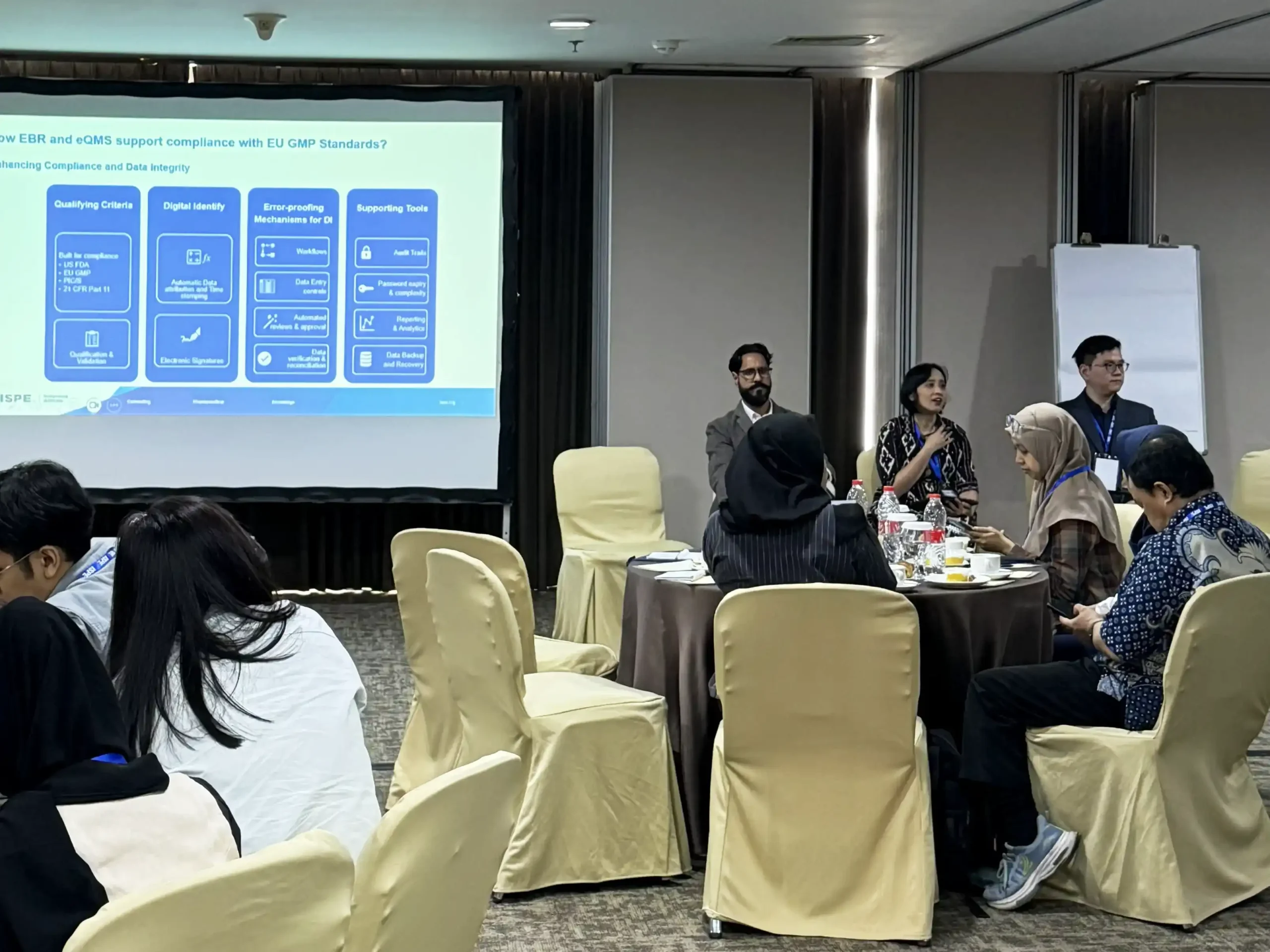
Drawing on insights shared by David Margetts, Group Executive Director at Factorytalk and BatchLine, during the 2026 ISPE Malaysia webinar, this article looks at how AI can support pharmaceutical manufacturing while maintaining traceability, verification and human oversight.

His session explored AI in GxP manufacturing, regulatory developments, validation and practical industry applications.
Why does reliable manufacturing data matter for AI?

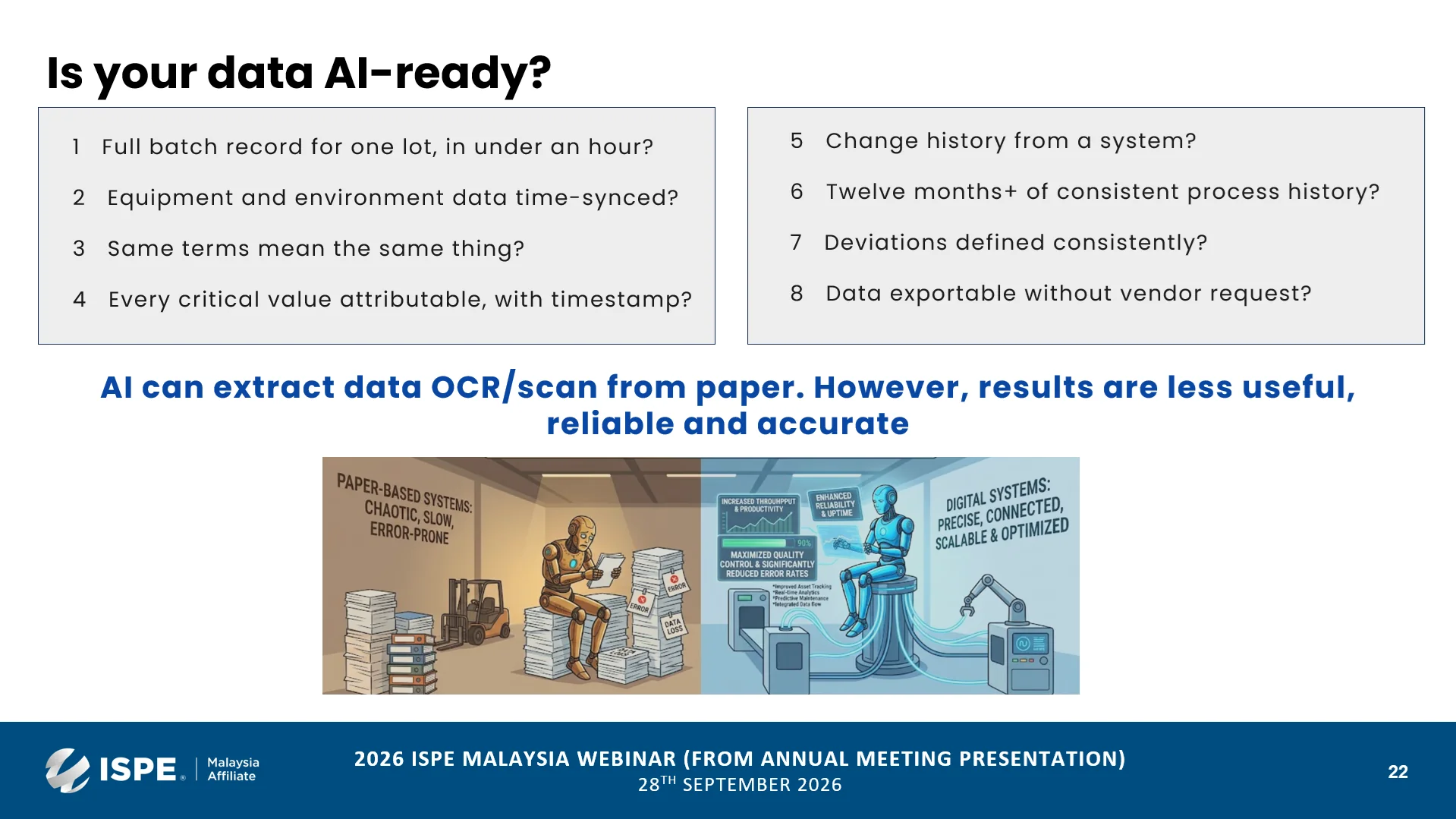
For AI to support GxP manufacturing effectively, it needs access to structured, reliable and traceable data.


This is where digital manufacturing systems such as MES and electronic batch records (EBR) become increasingly important.


Instead of relying on disconnected paper records, digital systems create structured manufacturing data that can be reviewed, analysed and potentially used by AI-enabled applications.


The question for manufacturers therefore becomes not simply “How can we use AI?”, but: “Do we have the digital data foundation needed to use AI effectively?”

How can AI support electronic batch records (EBR)?

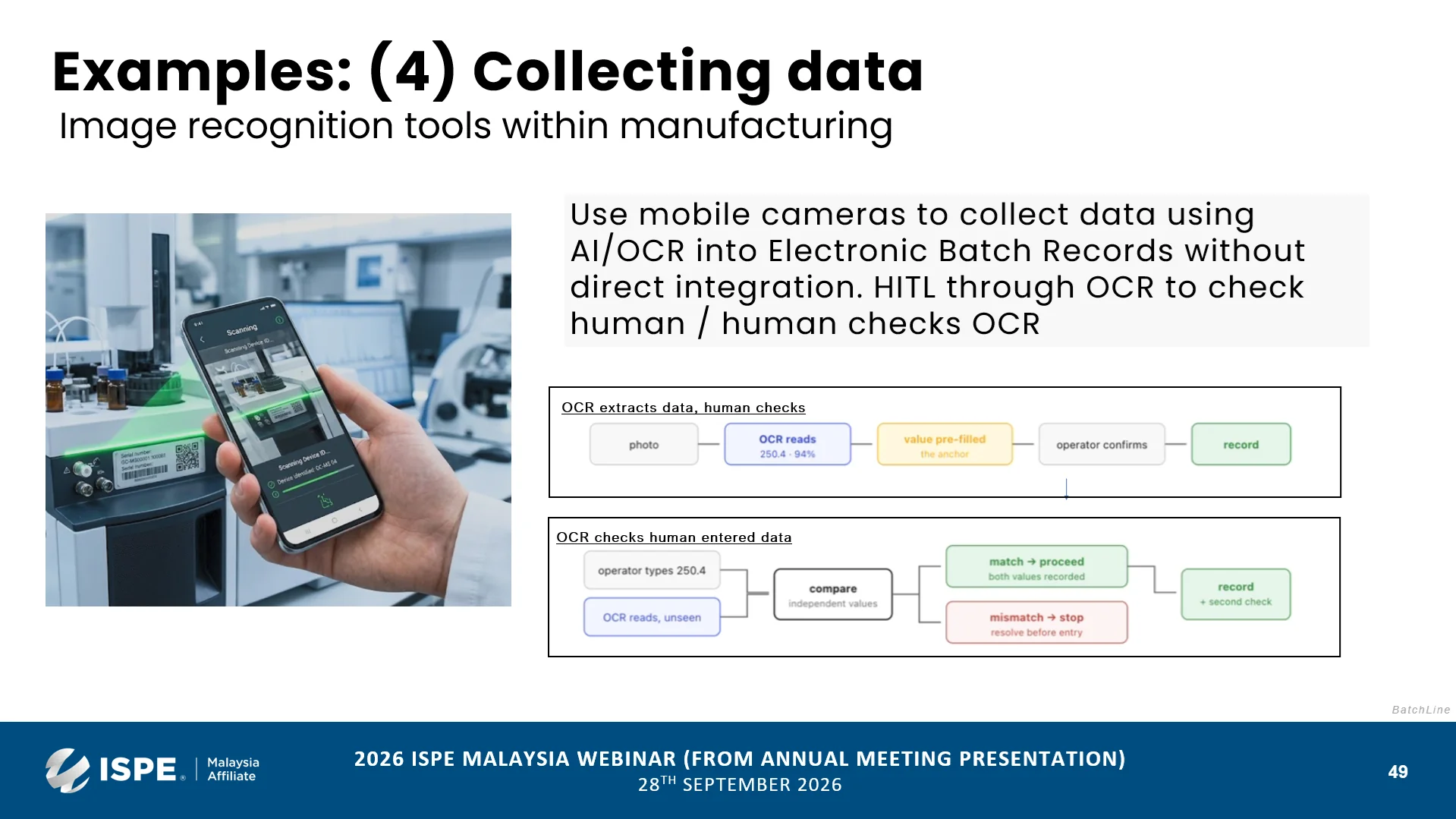
One practical area explored during the ISPE Malaysia session was combining AI and OCR with digital manufacturing records.


Within a BatchLine environment, potential applications include using AI/OCR to capture equipment readings into EBR, while requiring the operator to verify the captured information before it becomes part of the approved record.


AI/OCR can also provide an additional check by comparing manually entered values with readings detected from equipment displays, helping identify potential discrepancies while keeping the operator involved in verification.


This reflects the broader direction discussed during the presentation: moving from manual review and checking toward automated checking and verification while retaining appropriate human oversight.

Keeping people in control of AI

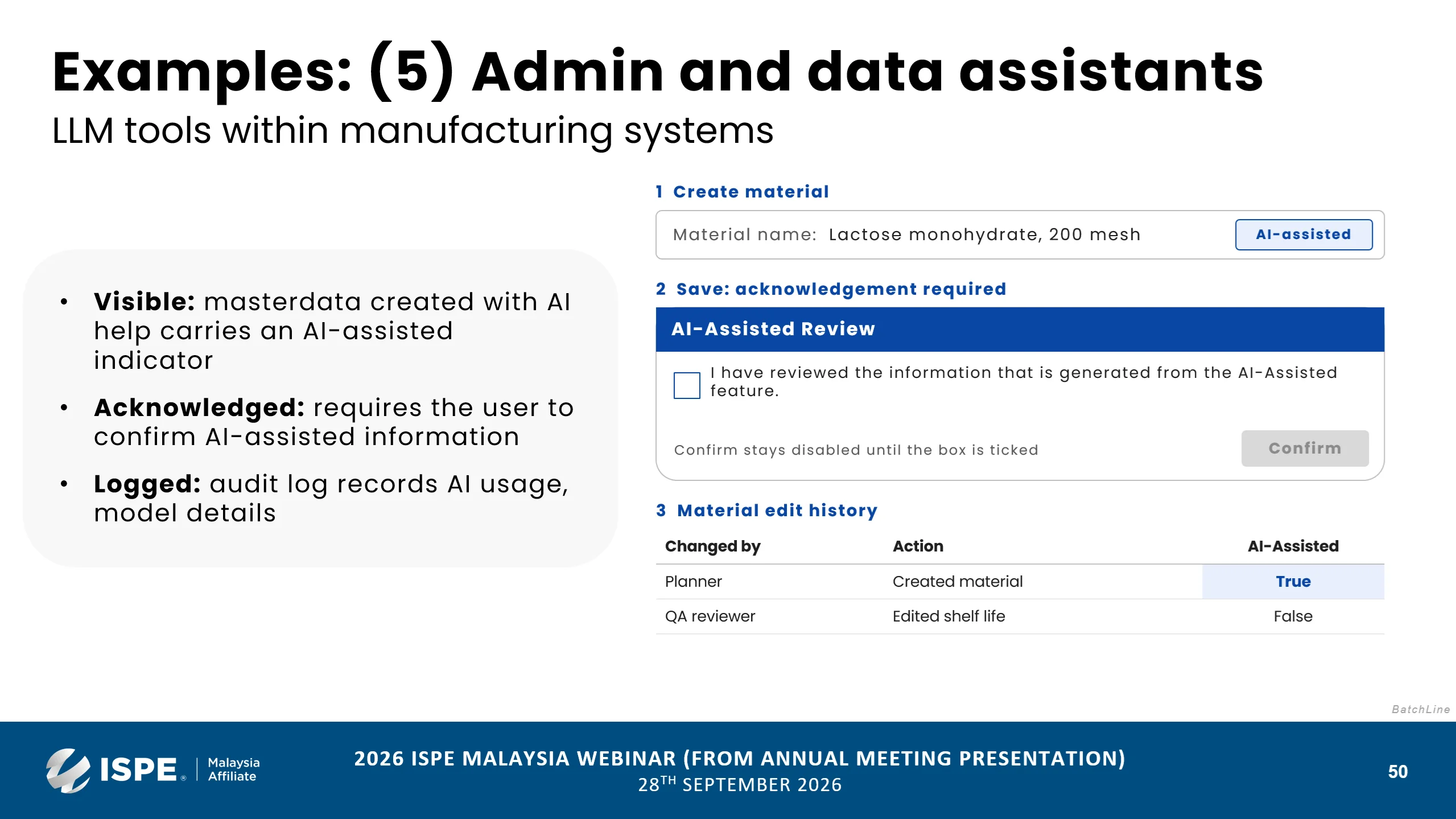
AI can also support activities such as master data creation, but in a GxP environment it is important that users understand when AI has been involved.

A controlled approach can include visible AI indicators, mandatory user confirmation and audit records capturing AI usage and relevant model information. 

The objective is not to allow AI to make uncontrolled decisions. It is to use AI to reduce repetitive work while maintaining traceability, accountability and human oversight. 

These considerations align with the wider AI principles discussed during the session, including human-centric design, risk-based approaches, data governance, documentation, performance assessment and lifecycle management.
Building the foundation for AI-ready manufacturing

AI-ready pharmaceutical manufacturing does not start with an AI model.It starts with digital operations and trustworthy data. 

By moving manufacturing records from paper into structured digital environments, manufacturers can create a stronger foundation for AI-supported workflows while maintaining the controls expected in regulated operations.

The key principle is straightforward:

Structured, traceable digital records create the foundation for effective AI—while people remain in control.

Build the digital foundation for what comes next

Discover how BatchLine MES can help you digitalise batch manufacturing, create structured manufacturing data and prepare your operations for the next generation of digital and AI-enabled capabilities.

Build the digital foundation
for what comes next


Discover how BatchLine MES can help you digitalise batch manufacturing, create structured manufacturing data and prepare your operations for the next generation of digital and AI-enabled capabilities.

Explore BatchLine MES

Leave a comment