During our recent webinar on Digital GxP Operations with MES and EBR in Life Sciences Manufacturing, we asked participants several live poll questions. The goal was to better understand the current realities and challenges of batch documentation and data use in pharmaceutical manufacturing.
The results revealed a clear picture of where many organisations stand today—and why digital GxP operations are becoming a priority.
Digital maturity is still early for many life sciences manufacturers
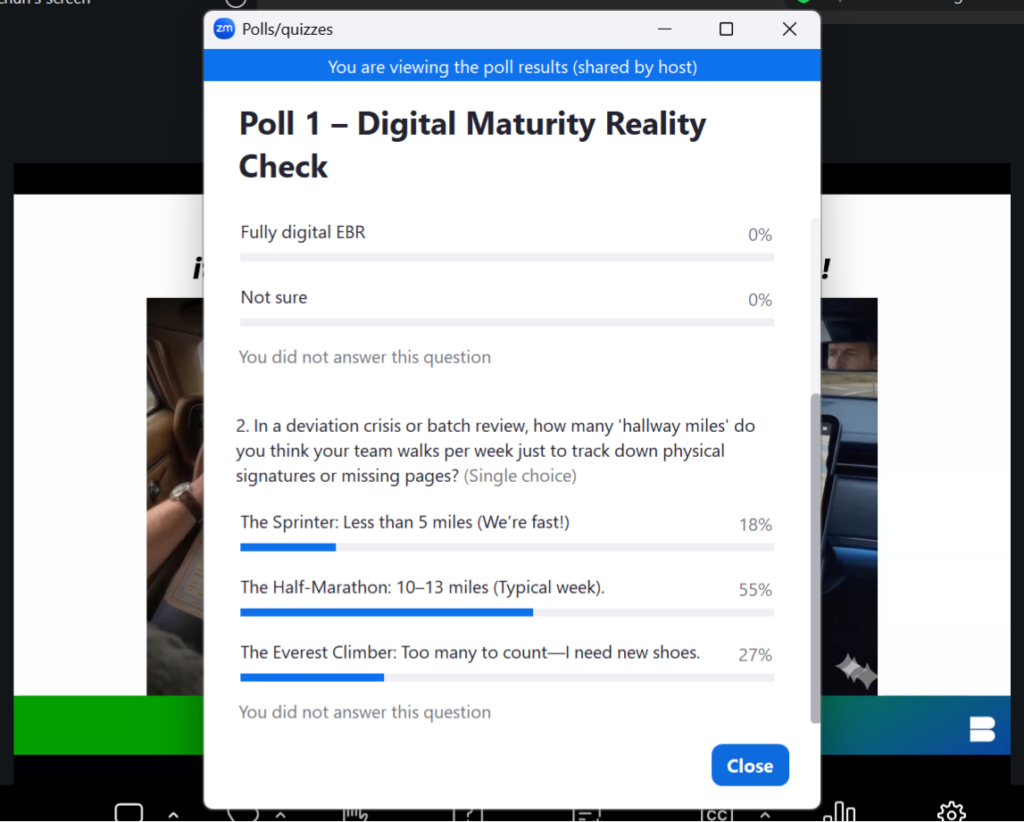
When asked about their current batch documentation process:
62% reported being fully paper-based
This shows that many organisaitons still rely heavily on physical documents during investigations or batch reviews.
In fact, when we asked how much time teams spend searching for signatures or missing pages:
55% said their teams spend a significant amount of time each week locating these documents.
This highlights how a surprisingly large amount of time is spent simply searching for documentation.
Operational pain points remain significant
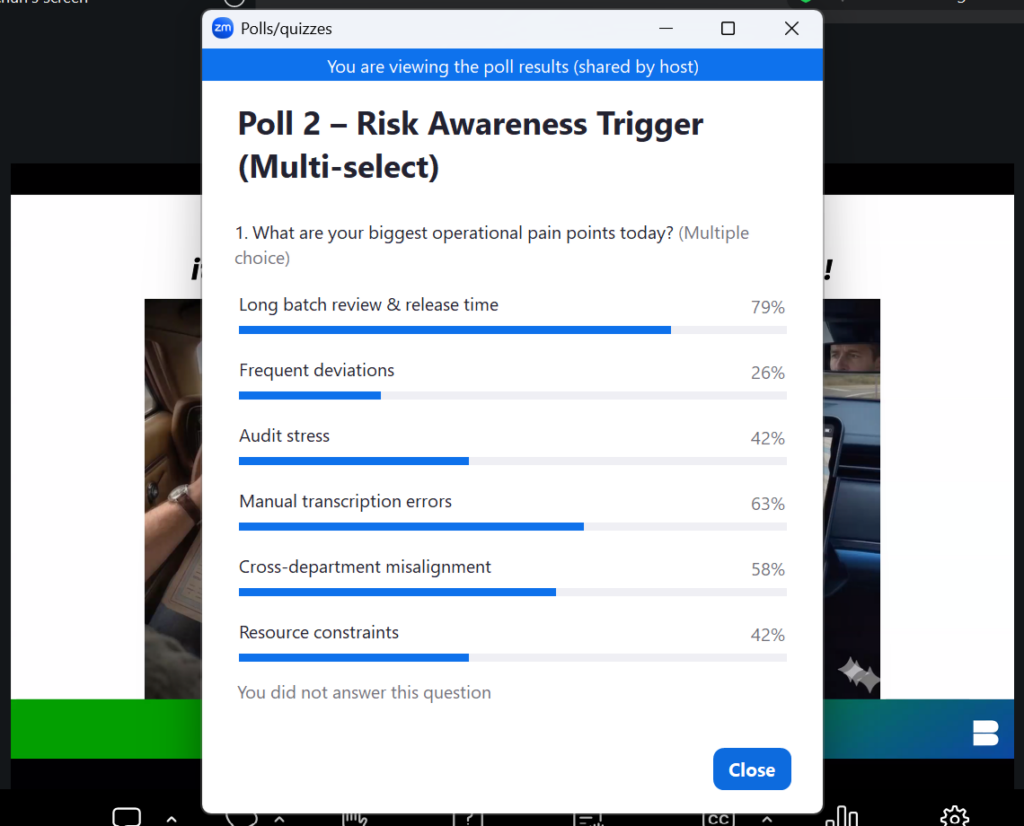
Participants highlighted several operational challenges, with the most common being:
79% – Long batch review and release time
Manual documentation and fragmented data flows continue to slow down batch release processes and create operational inefficiencies.
Batch release timelines are still measured in weeks
Another poll asked how long it typically takes from batch completion to final QA approval.
50% said it takes 1–2 weeks
This delay is often caused by manual record checks, missing signatures, and time-consuming document review.
Confidence in data integrity is still a concern
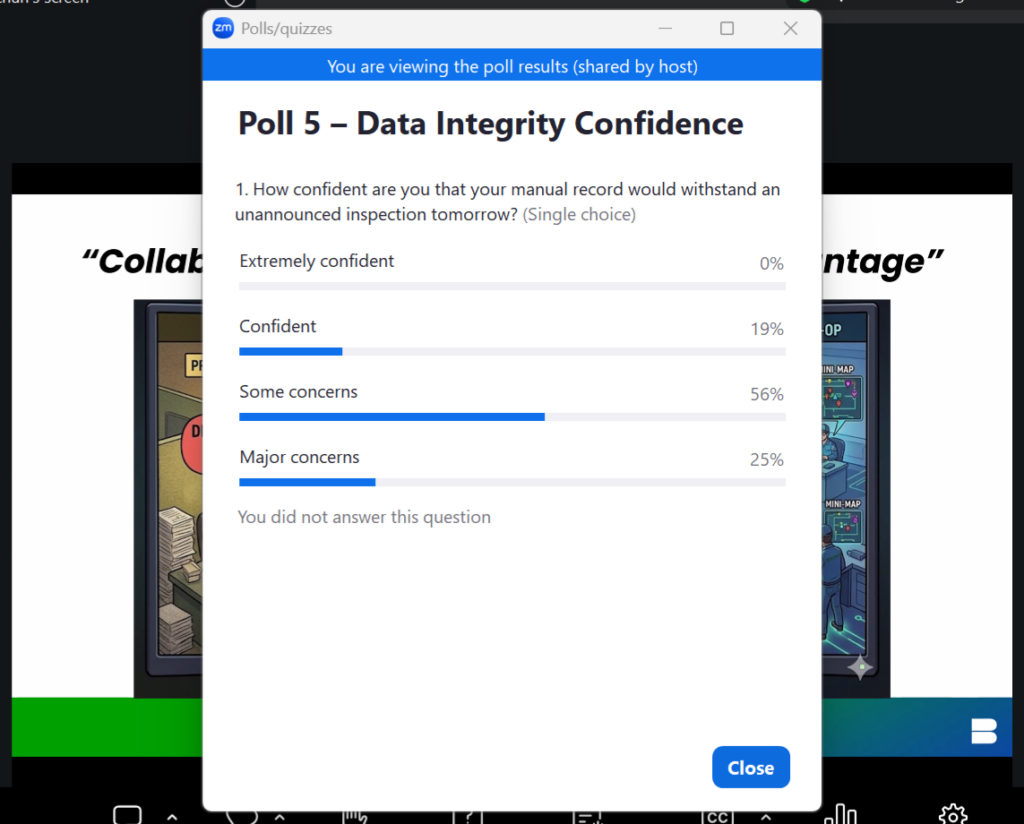
When asked whether manual records would withstand an unannounced inspection:
56% said they have some concerns
25% said they have major concerns
This highlights the ongoing challenge of maintaining strong data integrity in paper-based environments.
Accessing meaningful data is still largely manual
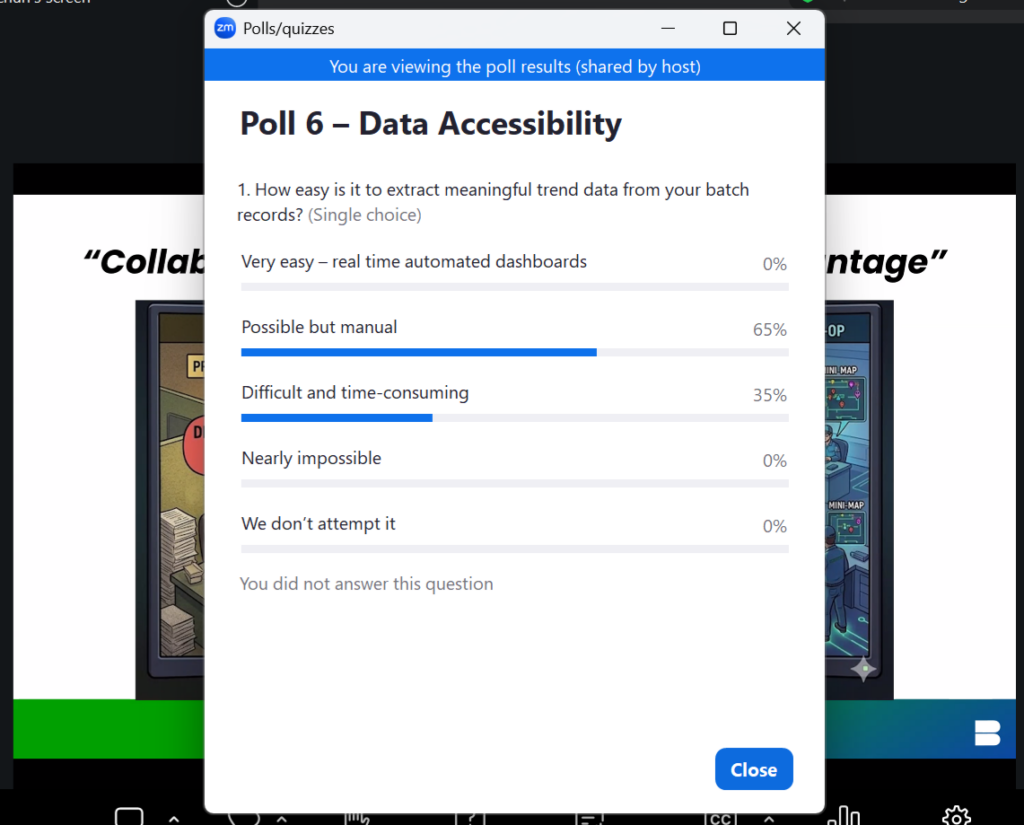
Even when data exists inside batch records, extracting insight is often difficult.
65% said extracting trend data is possible but manual
35% said it is difficult and time-consuming
Without structured digital data, turning records into actionable insights becomes a challenge.
Batch data is still seen mainly as compliance documentation
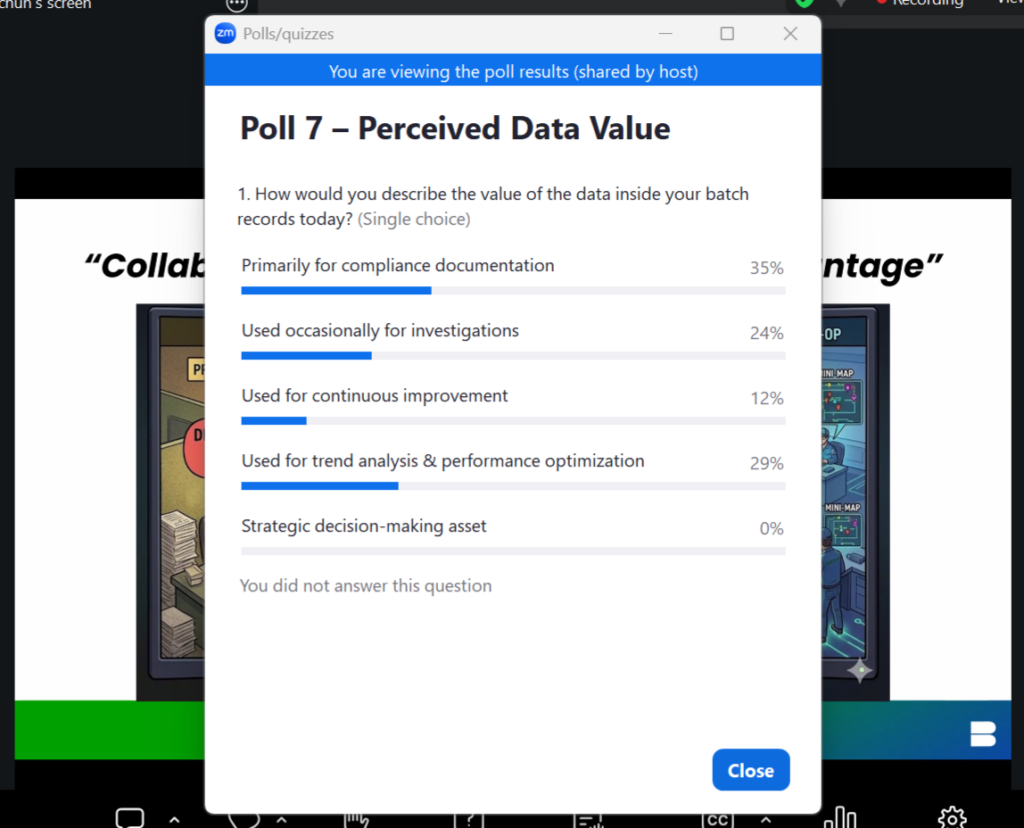
Finally, we asked how organisations currently view the value of their batch data.
35% said it is used primarily for compliance documentation
This indicates that, for many companies, batch records are still viewed mainly as regulatory evidence used to demonstrate compliance.
The shift toward digital GxP operations
However, this landscape is starting to change.
More life sciences manufacturers are moving toward fully digital Electronic Batch Records (EBR) and MES-based execution environments.
With digital execution:
✅ Deviations can be investigated much faster
✅ Batch review and release time can be dramatically reduced
✅ Release timelines can be reduced from weeks to days—or even minutes—after batch completion.
✅ Organisations can approach inspections with far greater confidence in data integrity
✅ Trend analysis becomes simple through real-time dashboards rather than manual extraction
Most importantly, batch data becomes more than documentation.
It becomes a valuable operational asset that supports continuous improvement, performance optimisation, and better decision-making.